Showing posts with label hate campaign. Show all posts

Monday

LGBTs pin hope on HB1483 (VERAFILES ARTICLE)

Monday
By Patrick King Pascual (VERAFILES.ORG)
HIS name was Carlos Canlas. He was 29 years old and gay.
He was found dead inside a rented room in a resort hotel in General Santos City. He bore multiple stab wounds on his body and face which made him unrecognizable.
It happened early May this year. Carlos checked in at the resort hotel alone. Two men were spotted entering his room after a few hours.
According to the hotel security, several minutes before they found Carlos, 10 boys rushed out of his room. It was also reported that several pieces of jewelry and P40, 000 cash were stolen from him.
After initial investigations, the police dubbed it as plain robbery and homicide.
A blogger from General Santos posted on his site: “My researcher friend went to the police station to interview the local police about the murder of Carlos. They told him the same story they told media, and added: ‘Hindi siguro nagbayad ng maayos dun sa dalawang lalake kaya ninakawan at pinatay. Baka hindi kaagad maproseso ang kaso nito .(He might not have paid enough so he was robbed and killed. His case might not immediately be processed.)’ The police looked away and smirked.”
In 2009, Winton Lou Ynion, a Palanca awardee, was found dead in his condominium with his hands and feet tied. His body and face bore multiple stab wounds.
It happened after Winton took home two guys. Investigators said the case was plain robbery and homicide.
When a group of advocates followed up the status of Winton’s case, the answer they got was: “Sir, may mga kaso na mas priority, kaya yun ang inuuna. Baka tulad din yan ng ibang mga kaso dati, hindi nagbayad sa lalake kaya nangyari sa kanya iyon. Balik nalang kayo. (Sir, there are more priority cases so they are being acted upon first. This might be just like similar cases where the victim did not pay his male visitors. Just come back.”
Both Carlos and Winton were gay.
There are several recorded crimes involving lesbian, gay, bisexual, and transgender (LGBT) that followed the same pattern as that of Carlos and Winton’s. Majority of these are still unresolved.

There is still no law that can assure LGBTs equal treatment in pursuit of justice.
The Anti-Discrimination Act of 2010 (House Bill 1483), filed by Rep. Teddy Casino of Bayan Muna in August last year, remains pending in Congress.
HB 1483 seeks to protect the LGBTs against unlawful discriminatory acts in employment, education, health services, public service (including military service), commercial and medical establishments, including police and military harassment.
What happened to Carlos and Winton was a clear case of discrimination as defined by HB 1483, or the LGBT Rights Bill.
Pending the passage of HB 1483, LGBTs have to deal with discrimination every day without legal protection as seen in the following cases.
Bemz Benedito, chair of Ladlad Partylist, was denied access to the female area of Wensha Spa because she is a transgender. The spa administrator claimed that being a male, Bemz she should stay in the male area. Bemz told them that she considers herself a female and that should be respected. Wensha refused to bend its rules and still enforced the spa’s policy.
Jed Tanjutco is a local airline employee in his mid 30s. While looking for a place to eat during a night out in Malate, Jed and his friends were arrested by policemen who accused them of being male prostitutes cruising for customers. The police asked each of them to pay P1,000 pesos in exchange for their freedom. Jed and his friends had no choice but to give the police P3,000.
A 25-year-old HIV-positive gay was refused in a hospital in Manila. He went there to consult his recurring cough. Hospital personnel told him they do not admit gay HIV-positive patients. He left and went to a different hospital.
Section 4, Article E of the Casino bill makes it punishable to deny access to medical and other health services open to the general public on the basis of such person’s sexual orientation or gender identity.
HB1483 ensures equal rights, not special rights, for LGBTs.
While the LGBTs’ situation has improved since the unenlightened days of long ago, it can still be a lot better if HB1483 is passed into law.

0 comments

Friday

Gay couple were buried alive in horrific French crime

Friday

French police say they still don't know for sure the motive 
behind the horrific death of gay couple Guy Bordenave, 39, and Luc Amblard, 56, who suffocated 
after being bound and gagged and buried alive.
(www.gaynewswatch.com)


A gay couple that went missing on March 7, 2009 in the French village of Cher has been found dead nearly three months later, AFP reported. The couple had been buried alive, officials said.

The bodies of Luc Amblard, 56, and Guy Bordenave, 39, who were entertainers living in the small village of Couy, were found on June 4, bound, gagged and buried in a hole about five feet deep, prosecutors say.

The cause of death by suffocation from being buried alive was confirmed by autopsy, said Prosecutor Eric Mathais at a news conference. "We did not find any trace of gunshot, or traces of violence, alcohol or drugs. The victims were dying," said the magistrate. 

Two men, between 53 and 37 years, have been detained by police for questioning. One of them knew one of the victims, and the pair was arrested on April 1 last year in the village of Cher. One of two suspects led police to the location of the bodies.

Both defendants were known to police, and have been indicted and jailed for "kidnapping, false imprisonment, followed by death.

Police have not determined whether hatred against one of the two victims was the motive for the horrible crime. The two men face up to life imprisonment. 


0 comments

Facebook Page Calls for the Assassination of President Obama. It has 1,000,000 Fans. Expose the Hate!


A Facebook Fan Page called "DEAR LORD, THIS YEAR YOU TOOK MY FAVORITE ACTOR, PATRICK SWAYZE. YOU TOOK MY FAVORITE ACTRESS, FARAH FAWCETT. YOU TOOK MY FAVORITE SINGER, MICHAEL JACKSON. I JUST WANTED TO LET YOU KNOW, MY FAVORITE PRESIDENT IS BARACK OBAMA. AMEN." is allowed to continue to exist on Facebook.

Where as a Facebook Fan Page called: "I bet we can find 1,000,000 people who support the health care law." was recently forced to become a Facebook Group:


Facebook Fan Pages get action in the News Feed and thus can go viral. Groups do not. Which explains why the group petitioning for Facebook to delete the Fan Page calling for the Assassination of President Obama is growing much smaller:

I implore you to please write about this story. To investigate why Facebook allows just a page to continue to go viral. To research if the Secret Service is watching the Page and its creator as a possible domestic terrorist, and to investigate the media's role in inflaming such hate. Freedom of the Press. Please use that freedom for peace and justice.

I AM NOT AN AMERICAN, I DON'T CARE EVEN ABOUT AMERICAN POLITICS. I JUST DONT LIKE TO  LET HATE PREVAIL IN FACEBOOK.


BLOGGER,

June

0 comments

Sunday

april 28 - I SUPPORT NEW ZEALANDS PINK SHIRT DAY TO STOP BULLYING AND GENDER HATE CRIMES IN SCHOOLS

Sunday
 
April 28, new zealand will shout against BULLYING and 
HATE CRIMES

Bullying is a major issue in our schools, workplaces, homes, and over the Internet. Pink Shirt Day was established when David Shepherd, Travis Price and their teenage friends organized a high-school protest to wear pink in sympathy with a Grade 9 boy who was being bullied. They bought 50 Pink Shirts and stood in the foyer handing them out to classmates, as the bully walked in the look on his face spoke volumes and showed the impact they had made and the bullies we never heard from again.

Now a Pink Shirt Day has been established in countries worldwide to raise awareness and help stop bullying in schools. By wearing a Pink Shirt on the 28th of April, you too can show your support against bullying where we live, work and play.If you would like to get involved with Pink Shirt Day we have a number of resources availible to participate. The more schools, workplaces and organizations wearing pink, the more people will hear about Pink Shirt Day and make an effort to stop bullying.

Recent research has indicated that over 30% of New Zealand students have been bullyed at some time. Many people carry the assumption that bullying is part of growing up although there is compelling evidence that it can lead to:
  • Depression and anxiety
  • Feelings of loneliness
  • Loss of self esteem
  • Difficulties making or maintaining friendships with classmates

There is also evidence both in New Zealand and internationaly, that bullying has a long term negative effect on children’s behavioural, emotional, social and educational adjustment Frequently bullied students are more likely than others to suffer a range of mental health and psychological problems.


0 comments

Colin Farrell Calls For End to Bullying

Eamon Farrell COLIN X390 (GETTY) | ADVOCATE.COM


www.advocate.com


Colin Farrell called for an end to homophobic bullying in a statement he issued to Belong To, an organization for LGBT youth in Ireland.

"Bullying is torture, it is another betrayal of basic human decency and its scars reach way into the future of its survivors," he  said on April 8. "The saddest truth is that not all children survive it. It is a potentially fatal societal illness and must be respected and not feared.  Respected and dealt with as a very real problem and as an adversary of a potentially harmonious world, that should have no place for bullies or bullying."

Farrell discussed growing up with his gay older brother, Eamon, and how he came home from school with blood on his shirt regularly.

"The beatings and taunting were very frequent for him and a constant part of his school years," Farrell said, noting he did not understand the difference between he and his brother. "If I did understand what difference was I understood it in the most pure and unaffected childlike way. To me then, as a child, difference meant being left out. Joy and laughter came with being included, being embraced, and BELONGING to."

0 comments

Saturday

Filipino group demands apology from racist radio host

Saturday

By Bernadette Ellorin
Published Apr 8, 2010 10:26 PM 

April 3 — BAYAN USA joins the millions of Filipinos in the United States and around the world in taking collective offense to the tasteless remarks recently made by radio personality Adam Carolla regarding Manny Pacquiao, the Philippines and the Filipino people on his nationally syndicated show, “The Adam Carolla Podcast.” We also agree with the demand that Carolla issue an official apology for his insensitive and vulgar insinuations about [world boxing welterweight champion] Manny Pacquiao, Filipinos, and most especially Filipina women and children in the sex trade industry. 
It’s sad that in 2010 it must still be pointed out that the two unfortunate realities of the Filipino people that Carolla despicably chose to goad with ridicule — the Filipino people’s overwhelming pride in Manny Pacquiao’s success and the existence of the sex trade industry that consumes mainly young Filipina women and children — stem from the most unfortunate reality of all, widespread poverty and joblessness in the country.
Only in a very poor country such as the Philippines, where people are afforded very few economic opportunities to rise from impoverishment, can the sex trade or any black market industry proliferate into a cultural norm.
Carolla’s tirade against Manny Pacquiao being “illiterate” and “praying to chicken bones” is no different than mocking Filipinos for being poor. Carolla mocks further by stating that all that Filipinos have going for them is “Manny Pacquiao and sex tours.” Clearly, poverty and the choices it leads people to make in the so-called Third World are game material for comedy and cheap laughs from the likes of Adam Carolla.
Perhaps the even bigger offense beyond Carolla’s words that should not go unchecked is the mainstream corporate media’s tolerance and allowance of such derogatory and racist comments to even air. That a white radio personality such as Adam Carolla can boldly make those remarks against a racial minority with seemingly no air of reservation for the social ramifications ultimately reveals that corporate media here in the U.S. have barely progressed from the turn of the 20th century when, during the long-forgotten Philippine-American War, mainstream U.S. newspapers blatantly depicted caricatures of Filipinos as “n — — rs”, monkeys and dog-eating savages, all in the effort to justify what was to be the U.S.’s first colonial project abroad.
CBS Radio Inc., which broadcasts “The Adam Carolla Podcast,” is one of the largest owners and operators of radio stations in the U.S., with more than 140 radio stations across the country, reaching millions of listeners everyday. In 2007, CBS Radio fired radio host Don Imus for racial slurs made against African Americans on his now-cancelled show, “Imus in the Morning.” Incidentally, CBS Radio was also the former home of notorious radio personality Howard Stern, who in 1992 used his nationally syndicated radio show to issue a warning that the Philippines “is a country where fathers sell their own daughters for sex” and that he wouldn’t recommend anyone go to the Philippines “unless you want to get laid.”
Despite making contributions to the U.S. for more than 100 years, Filipinos — one of the largest Asian groups in the country, numbering at nearly 4 million — are still painfully absent from mainstream media. With the likes of Adam Carolla, Howard Stern, Alec Baldwin, David Letterman and even the writing team of ABC’s Desperate Housewives each taking very public jabs against Filipinos and Filipino culture, it is no wonder why Filipinos would welcome and rally in support when one of their own rises from underdog obscurity to become perhaps the most successful boxing champion in recent history and deservedly earning worldwide respect and admiration.
Corporate media outlets such as CBS Radio Inc., Clear Channel Communications, Citadel Broadcasting and the media oligarchs such as Viacom that own them, literally profit in the billions annually off one task — disseminating information to the public and shaping public opinion. When left in the hands and interests of multinational corporations, we see how racists such as Adam Carolla, Don Imus and Howard Stern are offered lucrative deals and the power of their own nationally syndicated shows. While it remains to be seen how CBS Radio Inc. will respond to Carolla’s remarks now that the Filipino community is rightfully taking issue with it, clearly the bigger fight remains in the struggle against systemic institutional racism and for responsible media messaging that entails inclusion and representation of all racial minorities that suffer from marginalization. 
The writer is the chairperson of BAYAN USA.  E-mail: chair@bayanusa.org
Articles copyright 1995-2010 Workers World. Verbatim copying and distribution of this entire article is permitted in any medium without royalty provided this notice is preserved.
Workers World, 55 W. 17 St., NY, NY 10011
Email:
ww@workers.org
Subscribe
wwnews-subscribe@workersworld.net
Support independent news
DONATE

0 comments

Friday

Zimbabwean leaders denounce gays

Friday

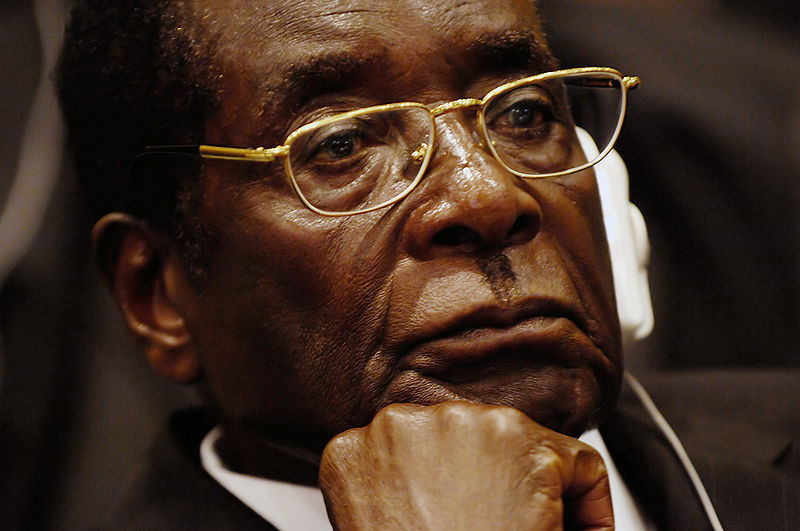
Zimbabwean President Robert Mugabe and Prime Minister Morgan Tsvangirai lashed out at gay people on March 25 during a belated International Women’s Day event.

Mugabe said: “Three days ago, I heard that some people want us to discuss the issue of gays in the new constitution. How do we even begin to talk about it? Those who engage in homosexual behavior are just crazy. It’s just madness. Insanity. We can’t do it or the dead will turn in their graves. … If you are doing that (gay sex), you are destroying nationhood. (It’s) an alien practice that is being exported into our country.”

“In Britain and the United States, I saw an archbishop blessing a gay wedding,” the president added. “I want to see how they will procreate. If they manage, then I will admit that I don’t know.”

Tsvangirai said: “The president has spoken on the issue of gay rights, men who breathe to other men’s ears. Never. I don’t accept that culture. Why do you look for other men when women make up 52 percent of the population? Men are few.”

A spokesman for the group Gays and Lesbians of Zimbabwe called the developments “very worrying.”

Zimbabwe will begin drafting a new constitution on April 10.
By Rex Wockner (www.gaytoday.com)

0 comments

Malawi gay couple choose silence in court, decision expected May 18


Source: The Daily Times
By Theresa Chapulapula

The suspected gay couple of Tiwonge Chimbalanga and Steven Monjeza Tuesday invoked their right to remain silent in a case in which they are answering charges of buggery and gross indecency.

The two told Blantyre Chief Resident Magistrate Nyakwawa Usiwausiwa that they have chosen to remain silent and will just file their defense. The magistrate has reserved the ruling on the matter to May 18.

The two, Tiwonge Chimbalanga and Steven Monjeza, were Tuesday expected to start defending themselves after the court ruled that they have a case to answer on all counts on March 21.

The two were arrested on December 28 last year just a few days after holding a public engagement at a lodge along Chileka Road in Blantyre.

During yesterday’s court session the state through Dickens Mwambazi indicated that the state was ready for court proceedings. But a lawyer representing the suspected gay couple Noel Supedi sitting in for Mauya Msuku told the court that the couple decided to remain silent.

“The defense will not parade any witness. They have decided to remain silent,’’ Supedi stated. He however asked for two weeks to file submissions on the matter.

Another State Prosecutor Fostino Maele told the court that they needed two weeks after being served with the submissions from defense to file theirs. Usiwausiwa allowed both parties to file their submission within the stated period.

“Make sure that the submissions have been filed in the stated period. If you don’t file the court will proceed to deliver its verdict on May 18,” the magistrate concluded.

As usual a crowd of people gathered at the court to see the couple and some were peeping through the window as proceedings were underway. It took the Police Mobile Force Officers who were providing security at the court to chase the crowd. Chimbalanga popularly known as Aunt Tiwo continued amazing people as he continued displaying his effeminate flirting characteristics.

International observers also attended the court hearing that took less than 15 minutes.

0 comments

Thursday

Iranian LGBT: Persecuted, harassed, raped, tortured, threatened with death, forced into operations

Thursday


This Iranian women was flogged for being a lesbian
By Paul Canning

In a series of personal stories submitted to the International lesbian, gay, bisexual, trans and intersex association (ILGA) the Iranian Railroad for Queer Refugees reveals massive state-sponsored persection of lesbians, gay men and transgender Iranians.

Iranian transgender people

Iran carries out more sex change operations than any other nation in the world except for Thailand. Since the mid-1980s transgender individuals have been officially recognized by the government and allowed to undergo sex reassignment surgery with the government even providing up to half the cost for those needing financial assistance. A change to a birth certificate is also allowed.

However many transgender surgeries are actually performed on gay men who report being coerced. They and actual Iranian transgendered people report being persecuted, tortured and coerced to undergo sex reassignment procedure.

Many of those Iranians undergoing operations end up far worse off because of carelessly performed or even incomplete reassignment procedures and absent pre-surgery counseling.

Those individuals who receive psychotherapy are sometimes assaulted and abused by their therapists. There have been incidents where therapists tell their patients to have sex with them if they want to prove that they have feminine emotions. There have been other incidents where transsexuals have been raped by their surgeons. Surgeons are aware that their transsexual patients do not often have financial and/or family support so they commit the sexual violence without fear of any sanction. Often, victims cannot file a complaint with the police as police themselves commit the same sort of acts all the time.

Most transgendered individuals cannot get a job until they go through a sex-change operation and receive a new identification card. Despite the supposed government assistance, most transgendered people lack the financial means for a sex-change operation. Consequently, many of them turn to prostitution in order to earn money for the sex reassignment procedure. Prostitution brings with it, however, all types of risks and dangers from sexually transmitted diseases and HIV infection to abuse, rape and murder.

Despite the government's theoretical acceptance of transgender people, like gays and lesbians, they are always in danger of getting beaten and arrested by the unaccountable Basiji forces (a paramilitary volunteer militia). Transgender people have been deemed 'criminal by the Basiji and delivered to Mafased, the organization responsible for dealing with 'moral corruption', which can imprison people for days and subject them to physical and psychological torture.

Judges, who can arbitrarily decides whether to set a person free or not, usually use sexist, brutal and demoralizing words and acts.

Sayeh has been arrested three times by the Basiji and forced to sign papers guaranteeing not to appear in public anymore with his transgender attire and appearance after two days of psychological torture in a detention centre - even though he was just wearing a simple shirt and pants at the time of his arrest. He fled Iran to Turkey and was granted asylum status by the United Nations High Commissioner for Refugees (UNHCR) and eventually found sanctuary in Canada in 2007.

Unfortunately, after a year of living in Toronto, he reportedly committed suicide due to serious problems related to his sexuality. The police did not disclose much detail on the mysterious circumstances of Sayeh’s death. It is not certain whether he committed suicide or had been killed and became another victim of homophobia.

In February 2007, a 40-year-old transgendered man from the neighbourhood of "Sheikhtappeh" in the city of Orumieh, Azerbaijan, was found murdered. The transgendered man, who was known as "Giz Naser" (meaning Naser the girl) in his neighborhood, was attacked and murdered by three men.

Holiya is a 24-year-old Iranian male-to-female transgendered person. In 2006, she left Iran for Turkey because of her sexual orientation and gender identity. Holiya is from one of Iran's wealthier families but unfortunately experienced severe difficulties when her family found out about her sexuality. Her family found it hard to accept the fact their son was a transgendered woman. Holiya's family repeatedly said she brought shame onto their honour. Eventually, they stopped financially supporting her and Holiya had no choice but to leave home.

While Holiya was in Turkey seeking asylum, she worked illegally at night in order to afford basic life expenses. The IRQR often sent her money through the organization’s Refugee Financial Assistance fund. Holiya applied to UNHCR. When she was granted refugee status, the UNHCR referred her case to the American embassy.

In May 2008, after 14 months of living in such a difficult situation, she finally left Turkey and arrived in the United States. Holiya is now living in Portland, Oregon, but she is not yet secure. Holiya continues to wear men's clothes because she hasn't come out and told people she is a male to female transgendered person. She fears people’s reactions because she used to live in Iran where she had to hide everything.

Iranian lesbians

Although not as visible internationally as the situation for Iranian gay men, Iranian lesbians also face viscious persecution.


Many are forced by society and by their family to live a lie and marry a man. Under Iranian law, it is lawful for a man to rape his wife. The only unlawful rape of a woman is 'zena' or adulterous rape.

If arrested, they risk being raped, whipped, persecuted or even tortured to death. Women convicted of lesbian sex face flogging or, after conviction for a fourth time, the death penalty.

If they are raped by strangers or acquaintances, they and their family members are often reluctant to file a formal complaint because being raped is itself a matter of shame and disgrace. Even when complaints are filed, they do not prosper as the law pertaining to the crime of rape requires four male witnesses to prove the legitimacy of the accusation.

If their sexuality is discovered by their family members, they are likely to be beaten and abused if not abandoned. Abandonment often means drug abuse and prostitution.

Sometimes, lesbian women are forced by their families to consult a doctor, a process which can involve agitation and trauma. There have been cases where a lesbian required hospitalization after being prescribed a dangerous pill used typically for serious mental illnesses. They may even be persuaded to undergo a sex-change operation, which can lead to depression, various mental and physical conditions and even suicide.

A university student in her mid-twenties in Tehran told IRQR that she was barred from leaving the family home for there months when her mother discovered she was a lesbian. After which she was under constant supervision and was prevented from communicating outside the family.
A Human Rights Watch report describes the experience of a 23-year-old woman in Tehran who had two girlfriends who were subjected to forced therapy and drugging. After the parents learned of her lesbianism, she was told that she must take estrogen for her condition of hormone deficiency. One of her girlfriends was forcibly medicated from age 15 until age 21. The side effects of the drugs included an inability to concentrate, constant dizziness, chronic fatigue, and loss of sexual interest.

Maryam is a 29-year-old Iranian lesbian refugee who IRQR helped connect to the UNHRC after she fled to Turkey. Her family forced her to marry one of their relatives. The husband raped her every night. She could do nothing about it because one of the first duties of women in the Islamic Republic of Iran is “sexual delivery” to their husbands.

She went to a doctor after the repeated brutal marital rapes and was told: “you appear to have been raped by an animal and you need urgent health care now.” However, her family ordered her to be patient and stay at her husband's home. She was then repeatedly beaten by her husband but she eventually escaped and went to a friend's house.

While she was there, her brothers came when she was out and told her friend they were going to kill their sister to save the family's honour. She allegedly had dishonored the family because she had left her husband and has suspicious connections with other women. That was when she fled Iran to Turkey.

Sanaz's mother forced her to marry a man after discovering she was a lesbian. Had she refused, her parents would have disowned her. She had no means of supporting herself. She continues to live in fear of her husband discovering her sexuality and thus might become abusive or publicly 'out' her in a shameful divorce. She also described a pattern of forced sex with her husband.

Taraneh is an Iranian lesbian refugee who has lived in the Netherlands for the past 17 years. She was 21 when she was first arrested in Iran and consequently spent three months in prison where she received 100 whip lashes.

Later, she was forced into marriage by her family. Yet, she continued her relationship with her girlfriend clandestinely.

Her neighbors became aware of her same-sex relationship and reported her to the police. The police forces raided her house, beat her severely and took her to a detention centre. She was severely tortured there and was forced to confess to her lesbianism.

She spent several days in solitary confinement while bleeding and lacking access to sanitary and medical facilities. In the Revolutionary Court of Esfahan, Taraneh was offered freedom if she agreed to co-operate with the secret police to identify other lesbians. After rejecting this offer, she was beaten again and was then sent to prison.

She spent two years in prison and received 180 lashes. She was flogged in front of other prisoners. Throughout this period, she was repeatedly threatened with imminent execution. Every night, she and other prisoners were taken to the prison’s courtyard and were forced to run. They were told by the guards that “people like them must be burnt to death.” When Taraneh was finally released after several years of torture and trauma, she immediately escaped to Turkey and applied for refugee status.

Shaghayegh is another Iranian lesbian who was forced to escape from Iran along with her partner in February 2007.

In 2001, she was forced into marriage, which consequently made her depressed and suicidal. During this period, she became friends with Nazanin, who is now her partner. Shaghayegh’s husband became aware of their relationship and blackmailed them. He repeatedly threatened that he would report them to the police. His threats continued even after Shaghayegh divorced him.

The husband once attempted to murder Nazanin by throwing a stone at her while she was driving. Left without any legal recourse, Shaghayegh and Nazanin had to buy themselves short periods of safety by giving the former husband a lot of money. They spent many of their days in fear as they sometimes heard stories about a lesbian friend of theirs getting arrested, beaten up, tortured and raped by the Basiji forces.

One month before leaving the country, the couple received constant threats from a stranger who wanted to force them into group sex. The stranger harassed the couple repeatedly by knocking at their door and windows at night and calling their cell phones. Once again, Shaghayegh and Nazanin were unable to report these incidents because, in the eyes of the police, they would have been not the victims but the criminals.

On Feb. 22, 2007, Shaghayegh was alone at home when she heard a knock on her door. She opened the door to be informed that police forces had come to confiscate her satellite receiver. While in her apartment, the police agents also noticed several DVDs beside the TV set. Among the DVDs were “illegal movies,” lesbian movies, and pictures of Shaghayegh and Nazanin kissing and making love.

The police took the DVDs with them and asked Shaghayegh who the man of the house was. After telling them that he was away, Shaghayegh was told to send her husband to them by next week. Understanding that the DVDs contained enough evidence to sentence her and Nazanin to arrest, torture and rape, if not outright execution, Shaghayegh and Nazanin arranged their escape to Turkey immediately and applied for refugee status once they arrived there.


Iranian gay men

In December 2008, Ali, who is 30, escaped from Iran to Turkey. He was caught when he was having sex with a man by his father, who was a member of the Islamic Revolutionary Guard. As a result, he lost his job, and he and his family were threatened with death.

He was arrested several times in Iran, the last time was in the summer of 2007 while he was on vacation in the north of Iran, and the Islamic Guard detained him simply because he was wearing a T-shirt and jeans and had spiky hair. He doesn’t feel safe even in Turkey because the father of the man he had sex with is in the Revolutionary Guard and has the ability to find him there and have him killed so he can cover up the scandal of his queer son.

In an interview with IRQR, he said: "I didn't do anything. I'm just a gay man who was born in a country in which my existence was forbidden, just for being gay, just for having a special feeling which is not that of a majority of society. I love guys. It is my right to be free, but I have to live in exile for it. I need help.”

On May 10, 2007, eighty-seven queer men were arrested and beaten by the police at a birthday party in Esfahan.

Around 10 p.m., the police force first entered the second floor of the home where the family members were gathered and arrested some of them and a child. The family members were released the day after. The police then went to the third floor where the party guests were gathered, turned off the lights, shot ‘fake gunshots,’ forced everyone to lie on the ground, began beating them and walked over them. Then the police dragged either head-bags or their blouses over the guests’ heads, forced them to go to the street and pushed them with a baton into a military car.

While the car had a normal capacity of 15-20 people, the police stuffed all 87 men into one vehicle. The people who were witnessing the event on the street reported that the clothes of the arrested men were torn and their faces were bleeding. One of the guests jumped out of the third floor window and needed an operation on his two broken legs as a result.

Based on information received, they were transferred to the Esfahan Dastgerd jail and were exposed to severe pressure and torture. Of the 87 men arrested, 60 were released unconditionally in the weeks following their arrest while 27 were later released on bail. They are not believed to have had access to lawyers or their families.

Farhad, the 19-year-old man for whom the birthday party was held, was condemned to pay 150,000,000 Tomans (about 170,000 USD) as bail. A judge reportedly said that those detained following the private party will be charged with consumption of alcohol and homosexual conduct ('hamjensgarai') even though there was no evidence to prove that these men were gay or were engaging in same-sex relations.

It is important to note that when storming the house, the police forces were equipped with cameras and were accompanied by four clergymen, making them effectively ready to satisfy the legal requirement of four “righteous men” to prove the act of sodomy. No evidence could be collected, however, to prove the crime of “lavat” because at the time of the invasion, no one was engaging in any sexual conduct.

The situation could have been different, though. This incident is just one of the many examples that show the extent to which the walls of homes are transparent and the halls of justice are opaque in Iran. It also shows the extent to which respect for privacy and personal dignity is fragile in Iran.

IRQR acquired information about this incident in Esfahan through its queer members in Iran. After some of our members contacted us by phone to report the situation, they were contacted by intelligence agents (Setad-e Khabari-e Ettelaat) and were brought into their office. They were accused of working for foreign organizations and asked to explain why there was once an Italian man at one of their parties.

When they denied the accusation, they were told that the intelligence agency has information about all of them and were presented with albums that contained the pictures and contact information of all their gay friends. They were asked to pay significant amounts of money in order to be released. Following their release, several of the arrested men left the country for security reasons. These incidents illustrate the extent to which members of the queer community, their telephone conversations and their relationships are monitored and controlled.

In April 2007, two gay men, 26-year-old Farsad and 24-year-old Farnam, received 80 lashes for giving a small party in their house, and were told that they would receive further lashes later for having an “improper” relationship.

Farsad and Farnam moved together into an apartment in the winter of 2007 to start their life as a couple. They invited a small group of their friends to celebrate their union. Just fifteen minutes after the party began; the police broke into their house and arrested everyone.

The arrestees were beaten brutally and were then transported to a police detention center. They spent the entire New Year holidays in a prison cell. “We were beaten to the point that my spine hurt permanently; I still feel the pain caused by the fists pounding my face,” Farsad says. They were accused of advocating decadence, homosexuality and prostitution.

Because they were arrested together, the authorities insisted on more details about their relationship. During the police interrogation, they were asked, "Did you have sexual intercourse with each other?” They did not admit to this, and eventually they were sentenced for having an improper relationship, for which they received a sentence of 80 lashes.

All other guests were released conditionally and they were ordered to remain in the city and not contact each other. Two weeks before the execution of their sentence, the party attendees were arrested again and were sentenced to 60 lashes each, all received the same day. Farsad and Farnam were told that the 80 lashes were just for holding the party, and that their sentence for the improper relationship would be executed later.

At the age of 21, Farsad set up a weblog in order to meet people like himself. The police found his address through his IP information and arrested him.

He spent three weeks in solitary confinement and he was accused of obscenity, advocating decadent values and homosexuality. He was sentenced to six months in prison. After completing his sentence, he suffered from depression and post-traumatic stress with symptoms so debilitating they forced him to get hospitalized.

Then his diary was found by his stepfather, who demanded Farsad denounce his homosexuality. When Farsad resisted, his step-father took him to Qom (a holy city in Iran and a centre for ayatollahs) to be seen by the grand ayatollahs. He spent several nights in custody, and was humiliated by the security forces there. They threatened him with stoning unless he denounced his homosexuality.

Traumatized by the threats, he was taken to see a grand ayatollah. Before him, he signed his confession and forgiveness plea. He was then returned to Tehran, where he received 95 lashes before being released. Almost as an afterthought, he was questioned by the supreme leader’s office in the university where he was studying and was expelled from school as well.

A documentary called 'Out in Iran:Inside Iran's Secret Gay World' was broadcast by the Canadian Broadcasting Corporation (CBC) in February 2007. The documentary, which was filmed in Iran, provides the world’s first look at life inside Iran’s persecuted gay community. The director meets an astonishing group of courageous people with heartbreaking stories.

One of these people is Hooman, a gay man who has been the victim of abuse, torture, rape and unlawful arrests. The Basiji forces have attacked him several times and have abused him physically and sexually. He has been warned not to inform the authorities, for this would only cause him to receive more severe punishments.

Before the release of the documentary, one of the young gay men interviewed in the documentary, named Mani, was forced to escape from the country. Mani's employer at the pharmaceutical firm where he worked at found out that he was gay and that he had participated in the documentary and reported him to the police.

The police recognized that Mani was the person who had recently done interviews with the BBC and CBC and raided his home to arrest him. Mani, however, was not home then. Recognizing the dangerous nature of the situation, Mani took refuge at a friend's house temporarily and planned to leave the country immediately. His father ordered his bank account to be frozen in an attempt to prevent him from fleeing the country. Mani finally left Iran with the help of IRQR.

Since the documentary was broadcast in February 2007, IRQR have received reports from Iran about the abuse and torture of at least one of the young gay men whose face was shown in the documentary.

The young man, named Farzan, had been identified by the Basiji forces and repeatedly beaten and bullied by them. He was threatened with more severe punishments if he decided to report his case. His family members also become aware of his sexual orientation and have since put him under extraordinary pressure and restrictions. These incidents show the great political and social forces that are at work to keep Iranian queer people an invisible and oppressed population.

Hossein, 22, escaped from Iran to Canada in September 2006, where he has been languishing while awaiting official refugee status and the granting of asylum by Canadian government. He is a musician who used to perform at various celebrations, including weddings and parties. These gatherings were often raided, but usually the host would pay the authorities a bribe, and that would end the matter.

He had his first relationship at age 12 with the son of a neighbor. It lasted two years.

In September 2006, he was playing along with other musicians at a private gay party in a home. The party was raided, and the police viciously attacked the men. One person was beaten so badly that Hossein later learned that he had died from it.

Hossein was beaten for ten minutes and lost consciousness for about 10 hours. He was later arrested while he was in hospital. Eventually his mother and a friend of his came to the hospital; The latter dressed in the uniform of a sergeant in the disciplinary forces and pretending to relieve the soldier who was guarding his room. Hossein put on a hospital worker's uniform and was able to escape.

After he was smuggled into Canada, his family's home was raided, and his mother and father arrested for three days on charges of helping him escape for being gay. His father was detained and tortured for a year and later died.

In November 2005, an 18-year-old boy from Agah Bisheh, a village in the province of Rasht, was set on fire by his father.

Outraged and saddened with the news of his son’s homosexuality, the father first poured gasoline on his son and then on himself in order to save his family’s “honour.” While the 18-year-old boy died from severe burns, the father survived with burns on his hands and face.

In March 2005, a gay man, named Sam, was arrested after he had been lured though online chat rooms to meet a man who had turned out to be a police agent. He was taken to a Basiji Base, and was severely beaten and tortured there.

After several hours of physical and mental torture, he was asked to write an undertaking not to ever enter a chat room again lest he would be entitled to the most severe punishments. He was threatened with execution. While being beaten and whipped, he was forced into signing a form and putting his fingerprint on it. He was repeatedly insulted with foul words.

After two nights, he was taken to a deserted area and was left alone there. He was saved by a van driver who took him to the city. Being fearful for his life and unable to tell his family members and friends about the incident, he left Iran for Pakistan immediately and applied for refugee status.

In June 2004, undercover police agents in Shiraz arranged meetings with men through Internet chat rooms and then arrested them. Amir was one of them, he was held in detention for a week. During this period, he was repeatedly tortured. The judicial authorities in Shiraz sentenced him to 175 lashes, 100 of which were administered immediately.

Following his arrest, security officials subjected Amir to regular surveillance and periodic arrests. From July 2005 until he fled the country later in the year, police threatened Amir with imminent execution.

In September 2003, police arrested a group of men at a private gathering in one of their homes in Shiraz and held them in detention for several days. According to Amir police tortured them to obtain confessions. The judiciary charged five of the defendants with “participation in a corrupt gathering” and fined them.

Compiled from reports submitted by Iranian Railroad for Queer Refugees to ILGA. For security reasons, the real name of the survivors, in most cases, were not used.

0 comments

Urgent appeal for Anwar


Press statement
For immediate use
6 April 2010

Urgent appeal for Anwar


Iraqi LGBT is appealing for help from people in Paris, France or people with contacts in France for Anwar Basim Saleh.

Anwar is a 21-year old Iraqi gay activist from Baghdad who was the coordinator of a safe house for LGBT people for the Iraqi LGBT organisation.

He has been ordered to leave Holland, where he had applied for asylum and been detained, for France.

Anwar was arrested in February 2009 by members of the Iraqi Interior Ministry (Badr Corps) for his role in Iraqi LGBT. He was badly beaten up, tortured and he suffered a serious trauma after the long period of detention and the abuse he was subjected to.

He was put under investigation and interrogated over and over again about his role as an LGBT activist and his involvement in the running of the safe house.

During his detention he met five other members of Iraqi LGBT who have been sentenced to death for the same reason. During a visit to the jail by an Iraqi LGBT volunteer, Anwar handed over a letter with a desperate appeal: “save me from the death penalty".

Iraqi LGBT immediately paid the authorities 5,000 dollars in bail to obtain Anwar's release.

As soon as he was released from jail on 14 April 2009 Anwar immediately got on a plane to Lebanon and then to Paris fearing an unjust trial and being sentenced to death.

After a few months without any help from the French institutions, associations and authorities (while begging on the streets and living as a tramp), Anwar (who speaks no other languages than Arabic) left France, and on 22 June entered Dutch territory.

He approached the police authorities in Rotterdam of his own accord and, after telling them his story, they sent him to the local refugee office which gave him shelter at Terabil asylum centre on 24 June.

On 2 September 2009 Anwar was sent for by the Justice Ministry to discuss his asylum application and was informed that according to the EU's Dublin Regulation regarding asylum it is up to France to decide whether or not to grant him refugee status.

Anwar begged them to reconsider his application in the Netherlands (where he knew he had support) to avoid having to make yet another traumatic move and long wait before he learns his fate.

Anwar now has to go back to France.

Iraqi LGBT is appealing for support or housing in Paris, France for this brave and heroic man.

If you can help please call Iraqi LGBT on ++44 (0) 7981 9594 53 or email iraqilgbt@gmail.com


0 comments

Walterina Markova: The 'Comfort Gay'


World War II in the Pacific ended 60 years ago with the infamous bombing of Hiroshima and Nagasaki. In the Philippines, the end of the war was hardly observed even if only to reflect upon the atrocities committed at that time with the Filipinos as the principal victims. A hidden chapter of those dark times is the story of “comfort gays.”
BY AUBREY SC MAKILAN
Bulatlat
The Japanese occupation 60 years ago was a difficult time for the Philippines. For over three years and until the day Japan surrendered to the USAFFE (or U.S. Armed Forces in the Far East), the Filipinos suffered grievously under the Japanese Imperial Army.


Among these Filipinos was Lola Rosa who, together with other aging “comfort women,” in the 1990s related the horrors of being forced into prostitution by Japanese soldiers. As their stories were being documented by women groups, human rights activists and journalists including TV anchor Loren Legarda, one soul found the courage to come out of the closet and share his own nightmare.

In an interview for a college paper with this writer in 2000, Walter Dempster Jr., a.k.a. “Walterina Markova” - a Filipino-Jamaican gay - said he was forced to become a sex slave by the Japanese army during World War II, at a time when homosexuality was then considered a cardinal sin and social taboo. Markova’s story had also apparently lured Legarda to the Home of the Golden Gays in Pasay City supposedly to interview a former comfort woman in the 1990s. At first disappointed that Markova was actually a gay, she nonetheless agreed to record his story.
"Walterina Markova"
Photo by Aubrey Makilan
Growing up in the 1930s in Manila, Markova’s young life was already shaped by brutality. As a child, he told this writer, he was constantly bullied and abused by his older brother, Robert. His first taste of freedom was when Robert died. Markova later joined a barkada (group) of six cross-dressers who made a living as stage performers. He and his gay friends were into cross-dressing without anybody noticing their true gender.
In the early 1940s, Markova said, the Japanese soldiers’ presence in the country did not at first bother him. In fact, the soldiers only laughed when they saw his group looting a grocery store somewhere in Harrison. But he was almost arrested in a raid by Japanese soldiers who were looking for Americans. His American stepfather was with him when the soldiers came and so they took him to a garrison at the University of Sto. Tomas.
After a while, Markova said the Japanese soldiers became brutal. “They were like kings in the land they do not own,” he said. The soldiers started confiscating rice, vegetables, and other supplies to store in their barracks. Forced labor was also imposed by then, he recalled. 
Violence
Violence was an ordinary scene at Japanese sentry points. Markova narrated how they were ordered to get off the vehicle to salute them. Failing to execute the right salute – bowing the head to hip-level with the hands atop the thighs - they would be beaten up. “‘Pag hindi maganda ang saludo mo sasampalin ka…bibigyan ka ng mag-asawang sampal” (If the salute was not executed well, the soldiers would slap you on both sides of your face), he said holding his cheeks.
One day, Japanese soldiers were chasing gays after being tipped off by an informer that a gay, in revenge for his parents’ death, killed a Japanese. A gay friend was arrested and was tied at the gate of San Beda College where passing Japanese soldiers beat him up and burned his skin with cigarettes. He was set free only after another gay suspect, believed to be the Japanese killer, was captured.
Markova said the suspect was then brought to Fort Santiago, where his arms were hanged with burning woods placed under his feet. His toe nails were all apparently pulled out during torture.
Sex slaves
Historical accounts show that some 80,000 to 200,000 women were forcibly enlisted to service Japanese troops at "comfort stations" throughout the Pacific during World War II. 
In those days, Filipino women were not safe even with the company of men. Actually, Markova said, women were raped anytime, anywhere, even in front of their male companions. “Nanghahatak na lang sila ng mga kababaihan saan man nila gustong gawin ang kanilang kahayupan” (They would force women to go with them and assault them sexually anywhere), said Markova.
At the age of 18 – the age for women adolescence - Markova, together with his gay friends, were not spared from such “service.”
Markova’s barkada was at first mistaken for women by Japanese soldiers when they were taken to the Japanese officials’ rooms at the Manila Hotel. Aside from beating them up using guns as punishment for their "deception," all drag queen performers were ordered arrested. The gays were brought to a camp – known today as the Rizal Memorial Sports Complex - where they became comfort drag queens, repeatedly raped far more brutally than comfort women.
Buti sana kung isang beses lang ginawa sa amin ‘yon, eh hindi. Para bang galit na galit sila na…’mga bakla ito, hindi ito mga tunay na babae.’ Lahat ng klaseng kababuyan ginawa sa amin. ‘Di ka naman makapagsabi ng ‘huwag,’ e bayoneta ang kaharap mo” (They did it not only once but several times. They were even angered by the fact that we were gays and not women. They did all vicious things on us and we could not protect ourselves because their bayonets were aimed at us), he recalled.
For years, the barkada would be brought to various Japanese camps to offer their “service” to the soldiers. During those days, Markova revealed that they only had a set of clothes. They would only wear rice sacks, he said, while washing their clothes.
Forced labor
The barkada were also made to do forced labor. Every morning, they would shine the combat shoes and wash the uniforms of the soldiers, then clean their barracks. They were also made to mow the grass in front of the Manila City Hall.
Despite all the “service” and other work they did, he said, they were often fed only with lugaw (rice porridge). It was already a feast for them if they were given sisid rice – rice from the sea which needed frying because of foul smell – with ginataang ubod ng saging (banana stalk cooked with coconut milk) and mongo beans.
Under Japanese custody, Markova saw the soldiers raiding communities almost everyday. Persons arrested would have their hands tied and then killed. “D’yan sa may Remedios Church, ang daming pareng Amerikanong pinatay d’yan” (At the Remedios Church [in Baclaran], many American priests were killed), he added.
But what horrified Markova was the killing of infants. “Pati ang mga sanggol!” Markova said shaking his head in terror, “ihahagis nila nang pataas bago sasaluhin ng bayoneta.” (Babies were tossed up in mid-air and their bodies pierced by bayonets as they came down.)
Because of these horrible incidents, Markova treated each day as if it was his last. But even so, he had not forgotten his dream to be free again.
“Liberation”
He had a chance to dash for freedom about a year before U.S. troops came back. He and some friends were aboard a military truck in a trip to another Japanese garrison. The truck had a mechanical trouble forcing the Japanese soldiers to get off to check. At that instance, Markova and his friends made their escape. The soldiers gave a chase toward a grassy field, now Edsa highway, but it was too late. 
One day during the “liberation,” Markova saw a captured Japanese soldier tied to the back of a jeep. In an act of revenge, he said, he hit the soldier with an umbrella. Then he took out a safety pin and repeatedly pricked the prisoner. 
“You don’t know what the Japanese did to us…they tortured us,” he told the soldier’s American captors when they tried to intervene.
“Pero nahampas ko na ‘yung Hapon…kung saan ko hampasin, sa likod, sa braso, sa ulo, sa mukha, para makaganti ako sa galit ko sa ginawa sa amin.” (I slapped the Japanese then struck his arms, his head and face to avenge what they did to us.)
Markova learned later that his two other gay friends were killed in a raid just before the end of the Japanese occupation, eventually leaving him alone to share this story.
Years after the end of the war, he found himself retiring from cross-dressing and worked as a make-up artist for the film industry. In the film industry, he also found that macho actors having gay lovers and some were into a relationship.
At night, he would stay at the Home for the Golden Gays in Pasay City – where other older gays who have been victims of society’s discrimination also took refuge.
He also became part-time trainer for young Filipinas to work as exotic dancers in Japan.
His story already publicized in print and broadcast, Markova never thought the same story would merit a film. Much more portray his life by no less than the film industry’s comedy king, Dolphy.
Hidden chapter
Shown in 2000, the film, “Markova: Comfort Gay,” brought to light a long-hidden chapter in gay history. It may have focused on the story of one man, but its scope is truly wide-ranging. It recounted the story of a nation’s struggle for self-determination and its own internal battles involving intolerance, conformity and expectation. The film documented the ultraconservatism of the 1930s, the horrors of the occupation, the travails of the Marcos years and the long struggle toward liberation.
The 97-minute film was included in the 2002 Seattle Lesbian and Gay Film Festival and 26th San Francisco International Lesbian and Gay Film Festival. 
Markova was thankful that the movie about his life was watched by many people. Asked whether he intended to claim indemnification from the Japanese government for the acts of atrocities committed against him and other gays, Markova said there is no need. 
Sa aming anim, ako lang ang nabuhay…humingi man ako ng claim sa mga Hapon, paniniwalaan ba ako?” (Among the six of us gay people, I was the only survivor…Even if I filed for a claim, who would believe me?), he told this reporter five years ago.
Last June 24, Markova, old and frail at 83, was hit by a racing cyclist in. He never survived.
A fellow gay who also lives at the Home for the Golden Gays, says of Markova: “Hanga kami sa kanya dahil kahit alam naman n’ya kung paano tignan ang mga bakla dito sa atin, may lakas pa rin syang ikwento ang karanasan n’ya”(We admire him for telling his story and for his conviction on how to treat gay people).
“Tayo namang tao ay hindi talaga magtatagal. Kaya ako lumabas ay para magbigay inspirasyon lalo na sa mga baklang hanggang ngayon ay inaalipusta pa rin,” Markova told this writer then. “Dahil dito, naniniwala ako na hindi lang ang sarili ko ang napalaya ko mula sa ganitong pagtingin.” (As humans, we won’t live long. Revealing my own story is my way of inspiring other gays who continue to be oppressed today. By my act, I may have probably given freedom to many other gay people.) Bulatlat

0 comments